
Essential API Types Every Developer Should Know

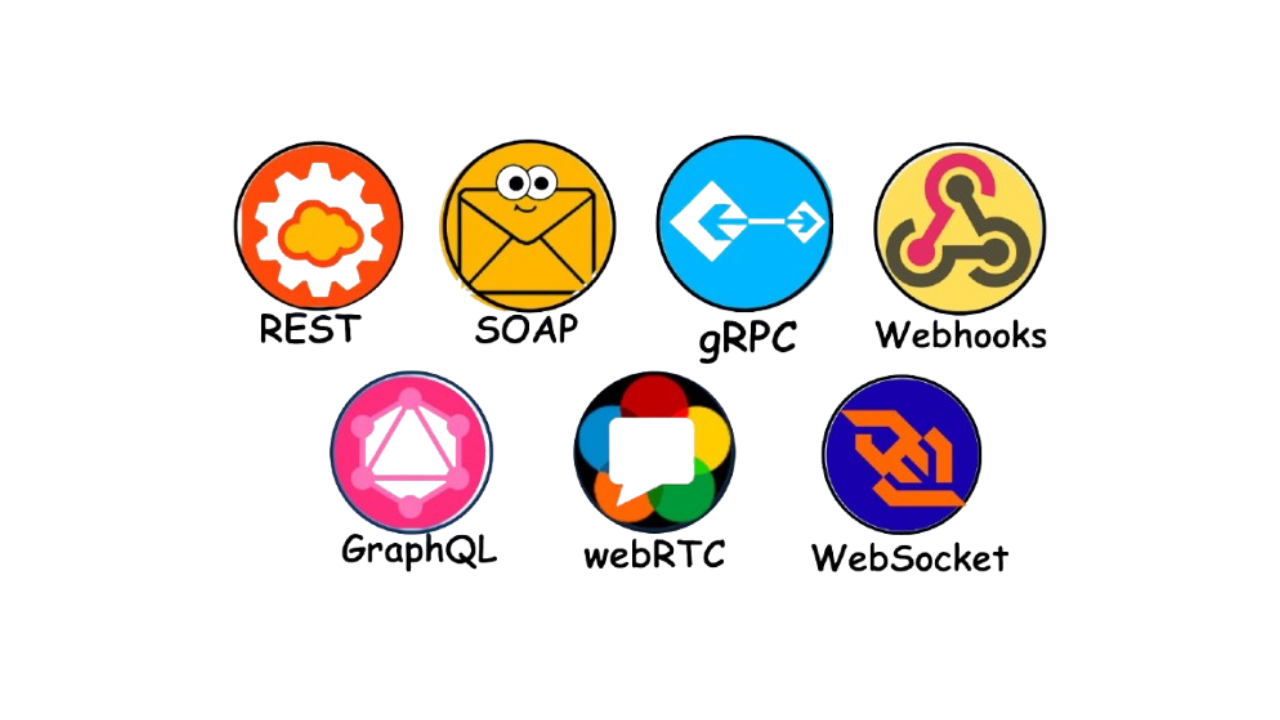
APIs (Application Programming Interfaces) are the connective tissue of modern software. They allow systems, apps, and services to talk to each other, powering everything from social media integrations to banking transactions and real-time chat apps.
💡 This post was inspired by a YouTube Video I watched.
Every Type Of API You Must Know Explained!
Different types of APIs exist, each with specific use cases, strengths, and weaknesses.
Here’s an overview of the most important API types every developer should know.
1. REST API
The most widely used API style today, based on HTTP verbs (GET, POST, PUT, DELETE), with resources represented as URLs.
| Strengths | Weaknesses |
|---|---|
| Simple and stateless | Risk of over-fetching or under-fetching data |
| Works well with JSON and HTTP caching | No fine-grained queries |
| Widely supported and understood | Limited flexibility for complex data needs |
Use cases: Most web/mobile apps, e-commerce APIs, CRUD services.
2. SOAP API
An XML-based protocol (Simple Object Access Protocol) with strict rules, schemas (WSDL), and security features.
| Strengths | Weaknesses |
|---|---|
| Highly standardized and formal | Verbose and XML-heavy |
| Built-in authentication, encryption, and transactions | Slower than modern alternatives |
| Reliable for mission-critical systems | Steeper learning curve for developers |
Use cases: Banking, healthcare, and enterprise systems where security and reliability are critical.
3. gRPC API
Developed by Google, gRPC uses Protocol Buffers (Protobuf) instead of JSON, enabling high-performance, strongly-typed communication.
| Strengths | Weaknesses |
|---|---|
| Very fast and compact | More complex setup compared to REST |
| Supports client, server, and bidirectional streaming | Debugging is harder (binary instead of JSON) |
| Cross-language compatibility | Smaller ecosystem compared to REST/GraphQL |
Use cases: Microservices, high-performance backends, streaming services (Netflix, Uber).
4. GraphQL API
Created by Facebook, GraphQL lets clients ask exactly for the data they need, avoiding over-fetching or under-fetching.
| Strengths | Weaknesses |
|---|---|
| Flexible and efficient data retrieval | More complex backend setup |
| Single endpoint for queries and mutations | Caching is harder than REST |
| Reduces network requests for clients | Risk of overly complex queries if misused |
Use cases: Frontend-driven apps, data-intensive UIs, dashboards, and mobile apps.
5. WebHooks
“Reverse APIs” that push data to your app when events happen (instead of polling).
| Strengths | Weaknesses |
|---|---|
| Real-time notifications without polling | Harder to scale with many subscribers |
| Simple to implement and extend | Requires secure handling (signatures, retries) |
| Great for event-driven workflows | Delivery issues if endpoints are unavailable |
Use cases: Payment notifications (Stripe), CI/CD triggers (GitHub), Slack integrations.
6. WebSockets
Persistent, full-duplex connections between client and server. Unlike REST, WebSockets remain open.
| Strengths | Weaknesses |
|---|---|
| Real-time, low-latency communication | More complex than HTTP |
| Bidirectional messaging | Requires stateful infrastructure for scaling |
| Perfect for dynamic, interactive applications | Security requires careful handling |
Use cases: Chat apps, multiplayer games, live dashboards.
7. WebRTC
Peer-to-peer protocol for real-time video, audio, and data communication in browsers.
| Strengths | Weaknesses |
|---|---|
| Low latency, direct peer-to-peer | Complex signaling setup required |
| Built into modern browsers, no plugins needed | NAT/firewall traversal challenges |
| Enables video, audio, and data sharing | Debugging and scaling can be difficult |
Use cases: Video calls (Google Meet, Zoom), collaboration tools (Figma, Miro).
Conclusion
Each API type has its sweet spot:
- REST → Simple, universal, great for CRUD.
- SOAP → Enterprise-grade reliability.
- gRPC → High-performance microservices.
- GraphQL → Flexible client-driven data fetching.
- WebHooks → Event-driven real-time updates.
- WebSockets → Persistent two-way communication.
- WebRTC → Real-time peer-to-peer collaboration.
Choosing the right one depends on your project’s goals, scalability needs, and complexity. Understanding these trade-offs helps you design robust, future-proof systems.
Explore more like this
![[PROJECT] Creating an efficient gRPC Client-Server Communication](/assets/images/PRJ-gRPC/cover_gRPC.png)
[PROJECT] Creating an efficient gRPC Client-Server Communication
gRPC (gRPC Remote Procedure Calls) is a high-performance, open-source framework developed by Google that enables efficient communication between distributed systems.
Comments