
Unlocking the Power of Low-Code and No-Code Platforms

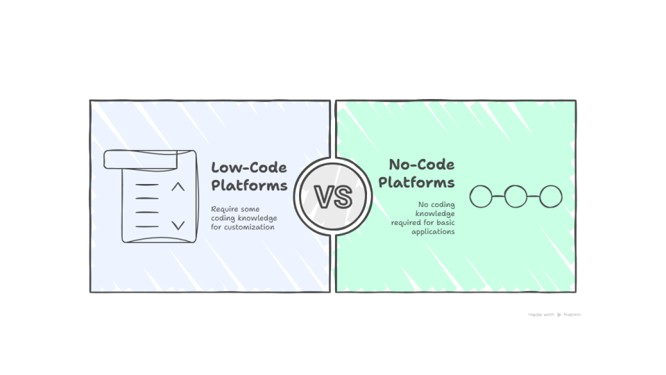
Low-Code and No-Code (LCNC) platforms empower non-developers and business users to create applications and automations with little to no coding required.
Instead of writing full applications from scratch, users can drag, drop, and configure workflows visually.
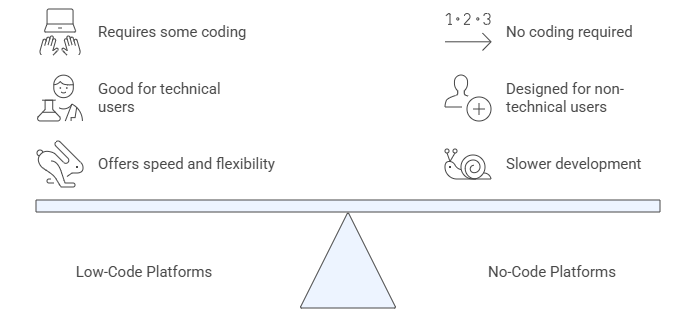
“This trend is a cornerstone of democratizing automation and is driving the rise of so-called citizen developers.”
Low-Code and No-Code platforms provide visual interfaces to design applications and workflows.
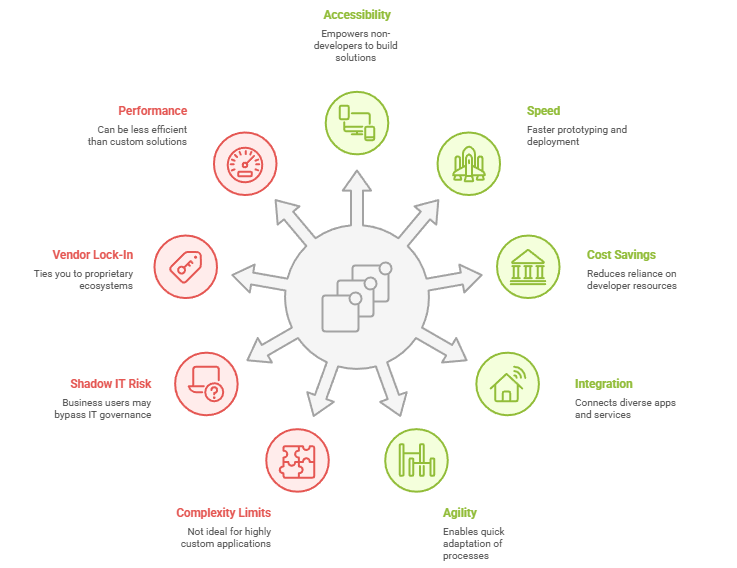
Benefits and Challenges of Low-Code and No-Code Platforms
Which automation tool should I choose?
Choosing the right platform depends on your specific use case, team skills, and integration needs.
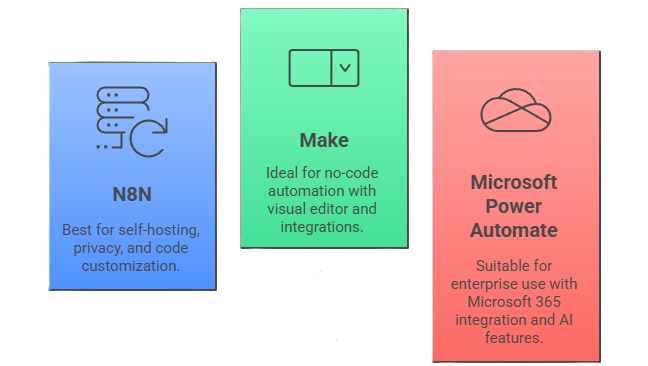
N8N is an open-source workflow automation tool with a big library of integrations. Make is a cloud-based no-code platform with a visual editor and many integrations. Microsoft Power Automate is an enterprise-grade low-code automation tool, especially strong in Microsoft 365 integrations.
Future of LCNC
- Hyperautomation Enabler: LCNC is a key driver of hyperautomation strategies.
- AI Integration: Many platforms now include AI-powered actions (text analysis, image recognition, predictions).
- Governance Focus: IT departments are developing guardrails to manage security, compliance, and quality.
💡 The future will see a blend: business users create workflows with LCNC, while developers extend them with advanced logic.
Conclusion
Low-Code and No-Code platforms like N8N, Make, and Power Automate are transforming how organizations approach automation.
They make automation accessible, fast, and collaborative, empowering both technical and non-technical users.
For anyone pursuing a career in process automation, mastering LCNC platforms is increasingly valuable — as they bridge the gap between business requirements and technical execution.
Explore more like this
Overview of the most common nodes in n8n
n8n provides a wide range of nodes that allow you to connect different services, manipulate data, and automate workflows. Here is an overview of some of the most commonly used...
![[PROJECT] Smart Inbox Automation with n8n — Auto-categorize Emails and Trigger Custom Actions](/assets/images/PRJ-n8n/cover-n8n.png)
[PROJECT] Smart Inbox Automation with n8n — Auto-categorize Emails and Trigger Custom Actions
With n8n, an open-source workflow automation tool, you can fairly easy create AI powered workflows such as an workflow that automatically categorizes incoming emails and triggers custom actions based on...
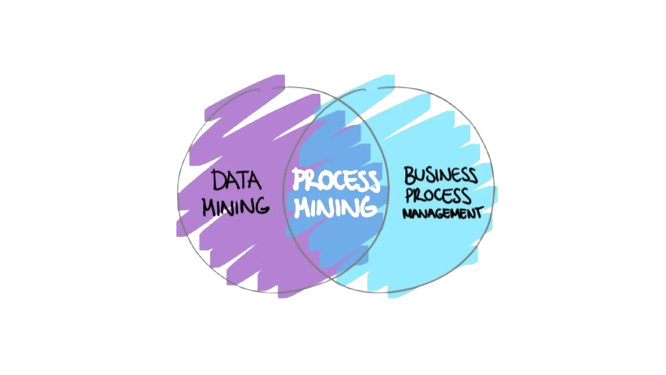
Process Mining with Celonis, UIPath and Power Automate
Process Mining describes the analysis of business data in order to visualize, analyze and optimize processes. So far I have come across three different tools that can be used for...
Comments